Deck Staining for Michigan's Climate: Timing, Prep, and Maintenance
Protect outdoor wood through Michigan seasons by checking condition and moisture, cleaning correctly, and choosing the right stain.
Article images are project inspiration and illustrate the kind of work discussed; they are not presented as completed customer projects.
A Metro Detroit deck moves through snow, standing moisture, spring pollen, summer sun, and autumn leaves every year. Stain helps manage water and ultraviolet exposure, but only when the wood is ready to accept it. Applying a premium product over damp, dirty, or nonabsorbent boards can still produce blotchy color and early failure.
The best plan begins with the wood species, age, prior finish, exposure, and current condition.
Inspect before cleaning
Look for soft boards, loose fasteners, splinters, raised grain, algae, heavy graying, peeling finish, and areas that stay shaded. Structural or drainage concerns should be corrected before cosmetic work. Note where planters, grills, rugs, or furniture have trapped moisture.
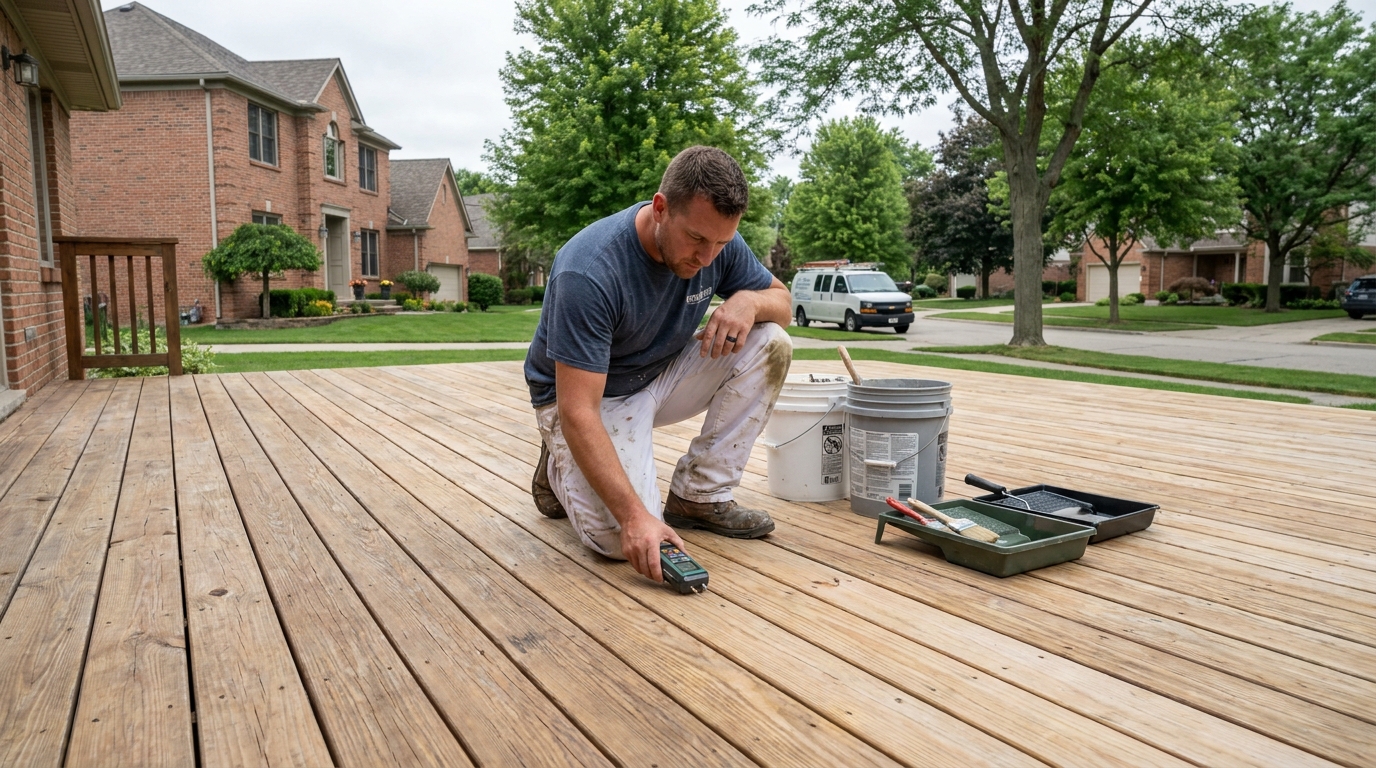
New pressure-treated wood often needs time to dry before staining. Older wood may be dry enough but blocked by a prior coating. A small water-drop test can indicate absorption: water that beads for an extended period suggests the surface may not yet accept a penetrating product.
Clean without damaging the wood
Cleaning should remove dirt, organic growth, and incompatible loose finish while preserving sound fibers. Excessive pressure can carve softer boards and create visible lines. The appropriate cleaner, agitation, rinse method, and dry period depend on the deck.
After cleaning, allow shaded joints and end grain to dry fully. A sunny top surface does not prove that moisture deeper in the boards is suitable for application.
Choose a stain by appearance and maintenance
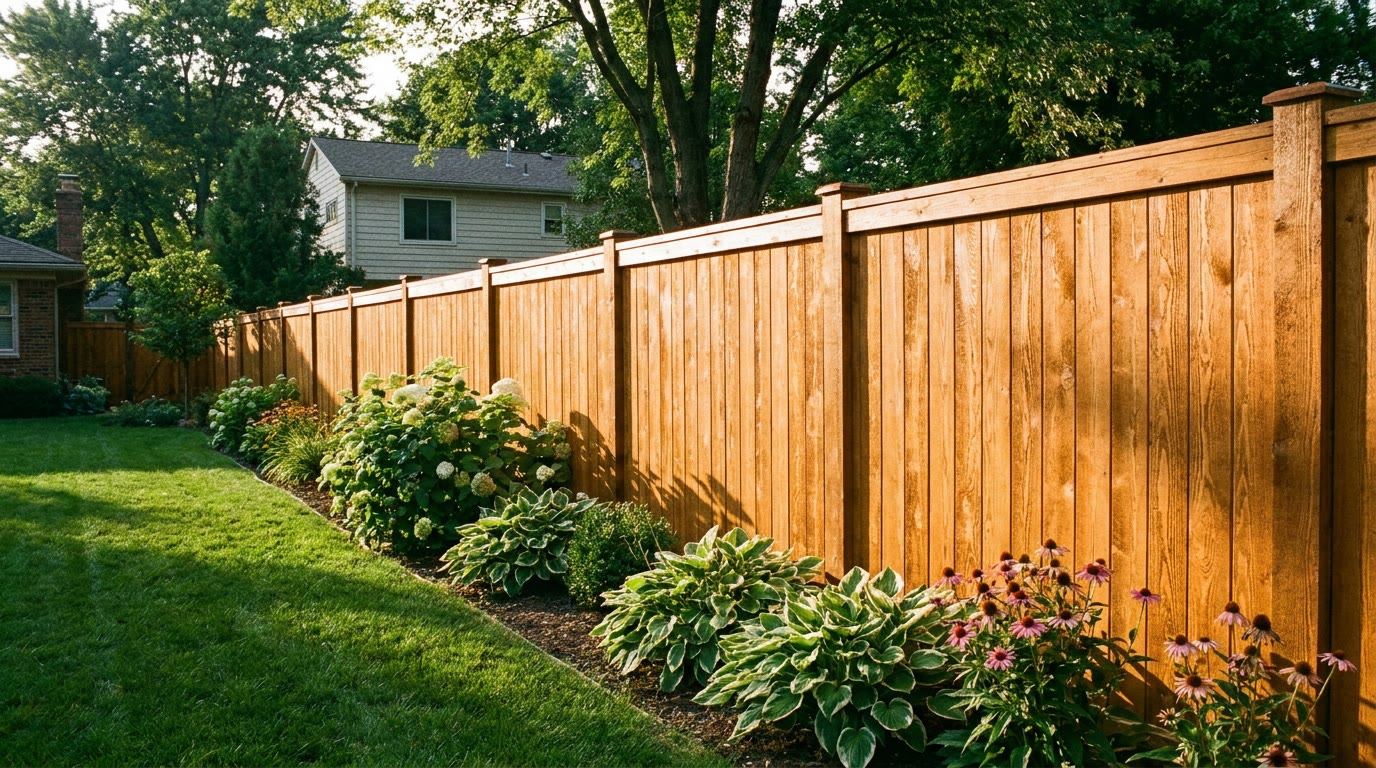
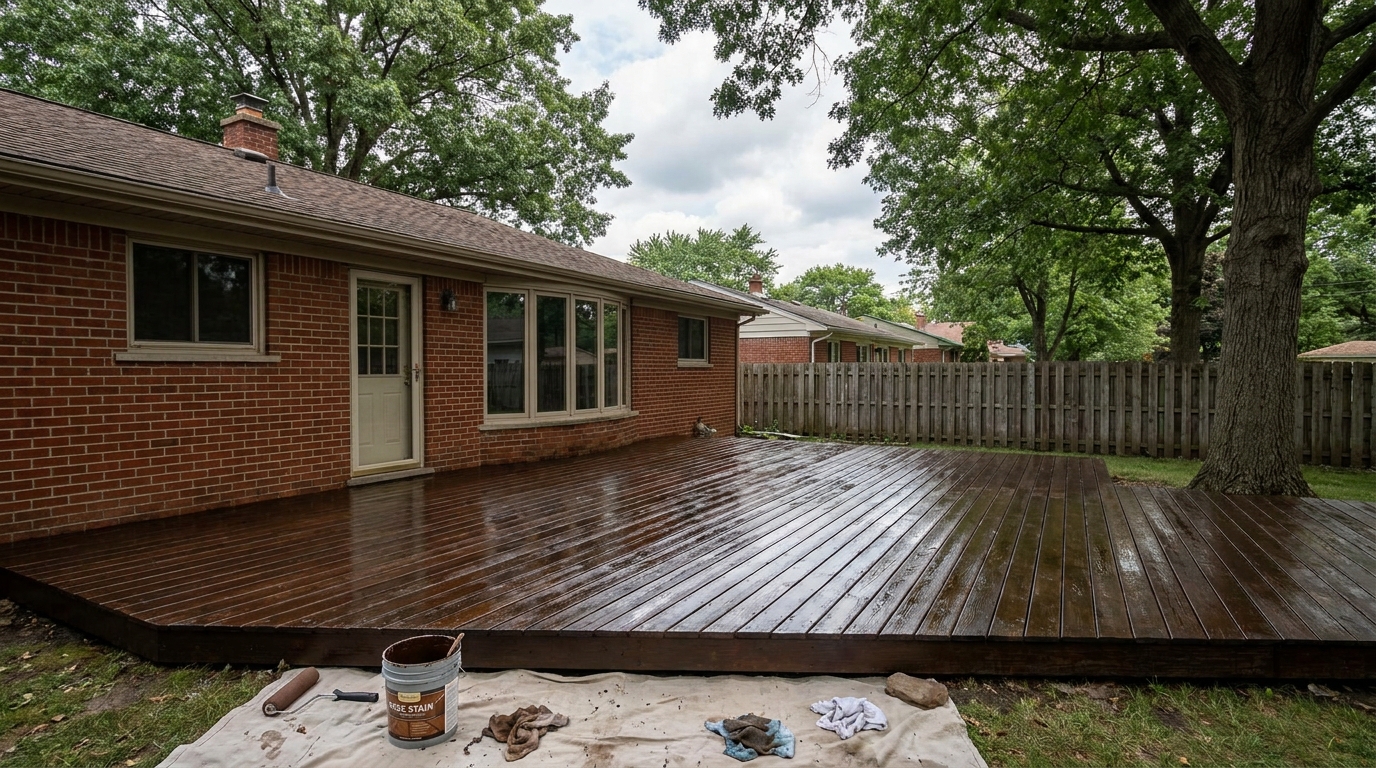
Transparent and lightly toned products show more grain but generally provide less visual masking. Semi-transparent stains add color while retaining character. Solid-color stains create a more uniform look and can suit previously coated surfaces when preparation and compatibility are correct.
No category is maintenance-free. Ask how the product weathers, how future maintenance is performed, and whether the prior finish limits the available choices.
Schedule for application and cure
A useful weather window includes suitable air and surface temperatures, manageable humidity, no expected rain, and enough cure time before furniture returns. Direct midday sun may make sections dry too quickly, while evening dew can affect late application.
- Work in sections that maintain a wet edge.
- Coat end grain and detailed areas as the system directs.
- Avoid excess material that cannot penetrate or level correctly.
- Keep people, pets, furniture, and rain off the finish during cure.
Maintain the deck between full applications
Sweep leaves and debris, keep gaps open for drainage, move moisture-trapping items periodically, and clean gently when buildup appears. Inspect horizontal boards and stair treads each spring because they wear faster than vertical rails. Early maintenance can extend the service life of the overall finish.
BH Painting Metro Detroit provides deck and fence staining for decks, fences, railings, and pergolas across Wayne, Oakland, and Macomb counties, including Southfield, Farmington Hills, Warren, Royal Oak, Eastpointe, and Pontiac. Call (313) 236-4558 for an evaluation of wood condition, prior coating, color options, preparation, and weather-aware scheduling.
Planning a painting project in Metro Detroit?
Share the property, surfaces, colors, condition, and timing with BH Painting Metro Detroit for a project-specific follow-up across Wayne, Oakland & Macomb counties.