 BH Painting Metro Detroit · Metro Detroit painting Sun–Fri service All of Metro Detroit
Decks & Fences
Deck & Fence Staining
Preparation-first staining for outdoor wood exposed to Michigan seasons.
Is your decks & fences project in our service area?
Location access only checks whether you appear to be within our Metro Detroit coverage bounds. It does not promise project availability, a start date, or an arrival time.
What's included
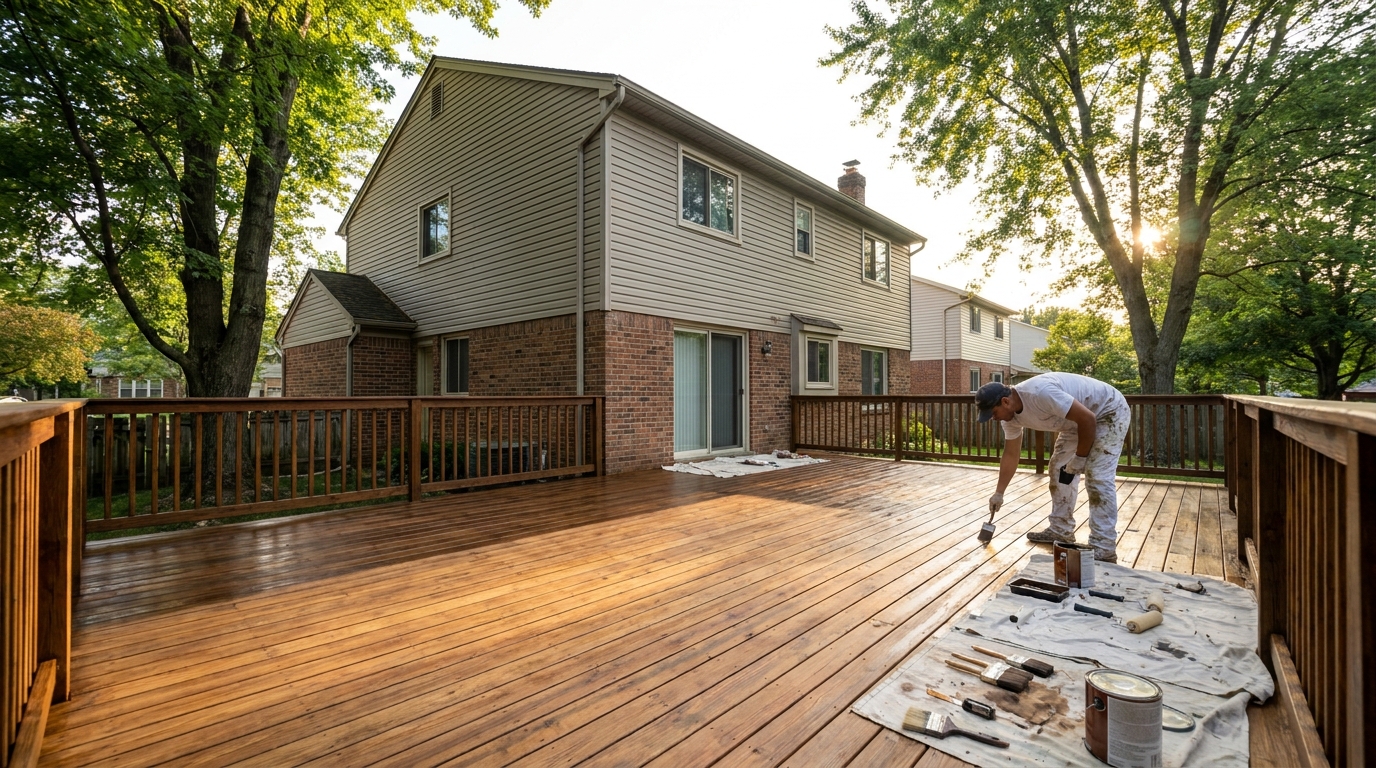
Deck and fence staining across Metro Detroit protects wood in Wayne, Oakland, and Macomb County from Michigan sun, rain, and freeze-thaw damage. We match the stain system to the wood condition, prior finish, and desired appearance, then clean, allow proper dry time, test absorption, and schedule application around local rain, temperature, and direct-sun conditions.
We discuss surface preparation, adjacent-area protection, products, colors, coats, access, and cleanup before work begins.
Service area
Decks & Fences service across Metro Detroit
Painting service across Wayne, Oakland & Macomb counties during posted business hours.
More about decks & fences in Metro Detroit
Deck and fence staining across Metro Detroit protects wood in Wayne, Oakland, and Macomb County from Michigan sun, rain, and freeze-thaw damage. We match the stain system to the wood condition, prior finish, and desired appearance, then clean, allow proper dry time, test absorption, and schedule application around local rain, temperature, and direct-sun conditions. For each decks & fences request, BH Painting Metro Detroit considers the substrate, preparation, property use, desired appearance, access, and cleanup requirements before finalizing scope.
We serve all of Metro Detroit for decks & fences — Detroit, Dearborn, Warren, Sterling Heights, Troy, Livonia, Royal Oak, Farmington Hills, Pontiac, Southfield, Westland, Taylor, and every city in our coverage map. Project dates are discussed after we understand the scope and current schedule.
The cost of deck & fence staining depends on the included surfaces, preparation, product selection, access, protection, and timing, so call (313) 236-4558 for a price on your job. Proposed scope changes should be discussed and documented before added work proceeds.
We document the agreed preparation, primer where needed, paint products, colors, sheen, surfaces, and closeout expectations so everyone is working from the same finish plan.
Fence staining is not deck staining
A deck is one broad horizontal surface you can see while you work. A fence is two vertical faces, and the shaded face dries at a different rate than the sun face, so a single pass applied to both at once can cure unevenly. Fence staining also has far more edge than surface: every picket carries exposed end grain at the top, which drinks stain and is the first place a finish fails, and the posts sit in ground contact where moisture arrives from below rather than from the weather. Board-on-board and shadowbox fences overlap, so the covered strips have to be reached before the neighboring board is coated rather than after. We work the fence face by face, back-brush what is sprayed so the stain is pushed into the grain instead of sitting on it, and treat post bases and picket tops as their own step.
New pressure-treated pine, weathered cedar, and previously coated fences
The wood decides the schedule. New pressure-treated pine leaves the yard carrying mill and treatment moisture, and it will reject stain until it dries down — sometimes weeks, sometimes a full season, and no product claim changes that. A few drops of water on the rail answers it: beading means the wood is not ready, absorption means it is. Weathered cedar and spruce usually need cleaning and often brightening to pull back the gray before color goes on, because stain applied over a dull mill-glazed or gray surface reads muddy. A fence already carrying a solid stain is a different job again: solid coatings do not accept a semi-transparent over the top, so the honest options are stripping back or recoating solid, and that is a decision to make while the scope is written rather than on the day.
Fence staining across Wayne, Oakland, and Macomb counties
Wood fence work reaches further out than interior painting does, and a good share of it sits past the built-up ring — Armada, Romeo, and Shelby Township in northern Macomb, Lake Orion, Clarkston, Bingham Farms, and Pleasant Ridge in Oakland, alongside the Southfield, Farmington Hills, Warren, Royal Oak, Eastpointe, and Detroit neighborhoods we cover every week. Those outer communities run long runs of privacy and split-rail fence with real exposure on both sides, which is a different measurement and a different amount of prep than a city back yard. Scheduling is set around rain and dry-down rather than around distance.
For a closer look at this work, read our guide to deck staining for Michigan's climate.
In depth
Questions about decks & fences across Metro Detroit
Practical answers from BH Painting Metro Detroit to help you compare painting scopes in Metro Detroit. Tap a question to expand.
Preparation depends on the surface and its condition. A clear scope may include washing, scraping loose coating, sanding glossy areas, filling minor holes, caulking selected gaps, and protecting adjacent finishes. Existing damage or repairs outside the painting scope should be identified before work begins.
Primer is commonly used on bare or repaired surfaces, difficult stains, major color changes, and areas where adhesion needs help. A previously painted surface in sound condition may only need spot primer. The written scope should identify where primer is planned and why.
Flat and matte finishes reduce reflection but can be less washable. Eggshell and satin add washability and highlight more surface variation. Semi-gloss is often considered for trim, doors, and moisture-prone areas. Product-specific performance matters, so sheen should be selected with the room and substrate in mind.
Coat count depends on the existing color, new color, paint product, application method, and surface porosity. Strong color changes may require primer or additional finish coats. We recommend defining the planned coating system and the expected finished appearance instead of relying on a blanket promise.
Review a physical sample in the actual room or exterior area at different times of day. Light, surrounding finishes, and sheen all affect perception. Record the manufacturer, color name, color number, product, and sheen before materials are ordered.
Temperature, surface moisture, rain, wind, and direct sun can change application and drying conditions. Exterior dates may move when conditions fall outside the selected product's requirements. A responsible schedule protects the coating system instead of promising work in unsuitable weather.
The closeout plan should cover removal of masking and project debris, orderly storage or removal of labeled touch-up paint, and a walkthrough against the written scope. Any agreed touch-ups should be documented before the project is considered complete. Call (313) 236-4558 to discuss your project in Metro Detroit.
Planning a decks & fences project?
Tell BH Painting Metro Detroit about the surfaces and finish you have in mind.