How to Choose Interior Paint Colors for a Metro Detroit Home
Use daylight, undertones, fixed finishes, and real sample areas to build an interior palette that works through every Michigan season.
Article images are project inspiration and illustrate the kind of work discussed; they are not presented as completed customer projects.
Choosing an interior paint color from a small card is difficult because color never appears by itself. It reacts to window direction, bulbs, flooring, counters, furniture, wood tones, and adjoining rooms. Metro Detroit homes add long gray winters, bright summer sun, mature shade trees, and housing styles that range from Detroit brick colonials to Royal Oak bungalows and newer Macomb County homes.
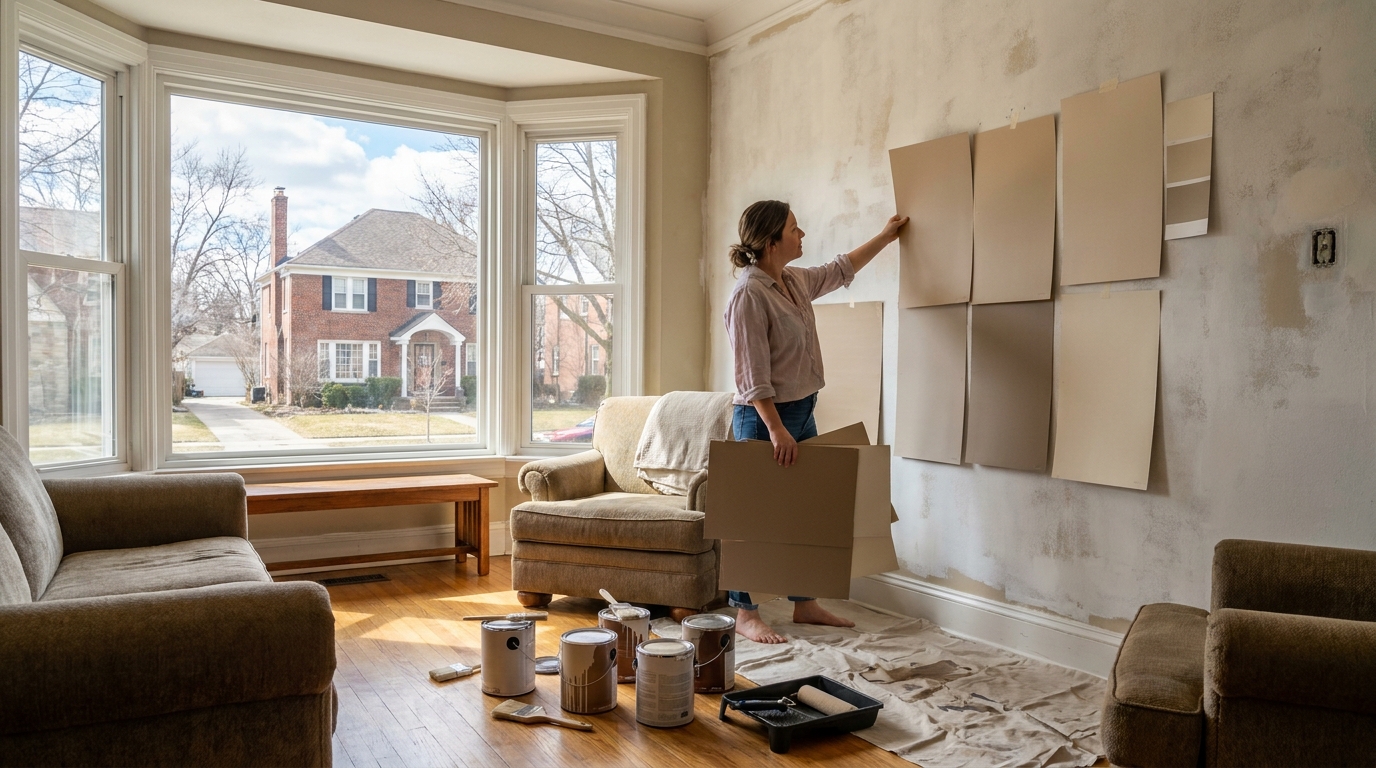
The reliable approach is to narrow the palette in context, then test finalists on the actual surfaces. Sampling costs very little compared with repainting a room that turns unexpectedly cool, yellow, or dark.
Start with finishes that will remain
List the elements you are not changing: flooring, stone, tile, countertops, cabinets, large furniture, and stained wood. These fixed finishes establish the undertone family. A warm floor may make a blue-based gray look colder than it appeared online, while cream stone can make a crisp white feel harsh.
Carry samples next to each finish instead of judging them against white paper. In an open plan, check the color beside every visible adjoining room so transitions feel intentional.
Read the light throughout the day
North-facing rooms usually receive cooler indirect light. South-facing rooms tend to stay brighter and warmer, while east- and west-facing rooms can change dramatically. Tree cover, porch roofs, and neighboring houses also matter.
After sunset, bulb color affects the result. Warm bulbs can pull yellow from a neutral; cooler bulbs can flatten warm tones. Review samples under the lighting you use each evening.
Test larger sample areas
- Place one sample near the main window and another on a shadowed side.
- Compare it directly with trim, flooring, and permanent finishes.
- Observe it in morning, afternoon, evening, and cloudy conditions.
- Label every sample with its exact color and product reference.
Plan color flow and sheen
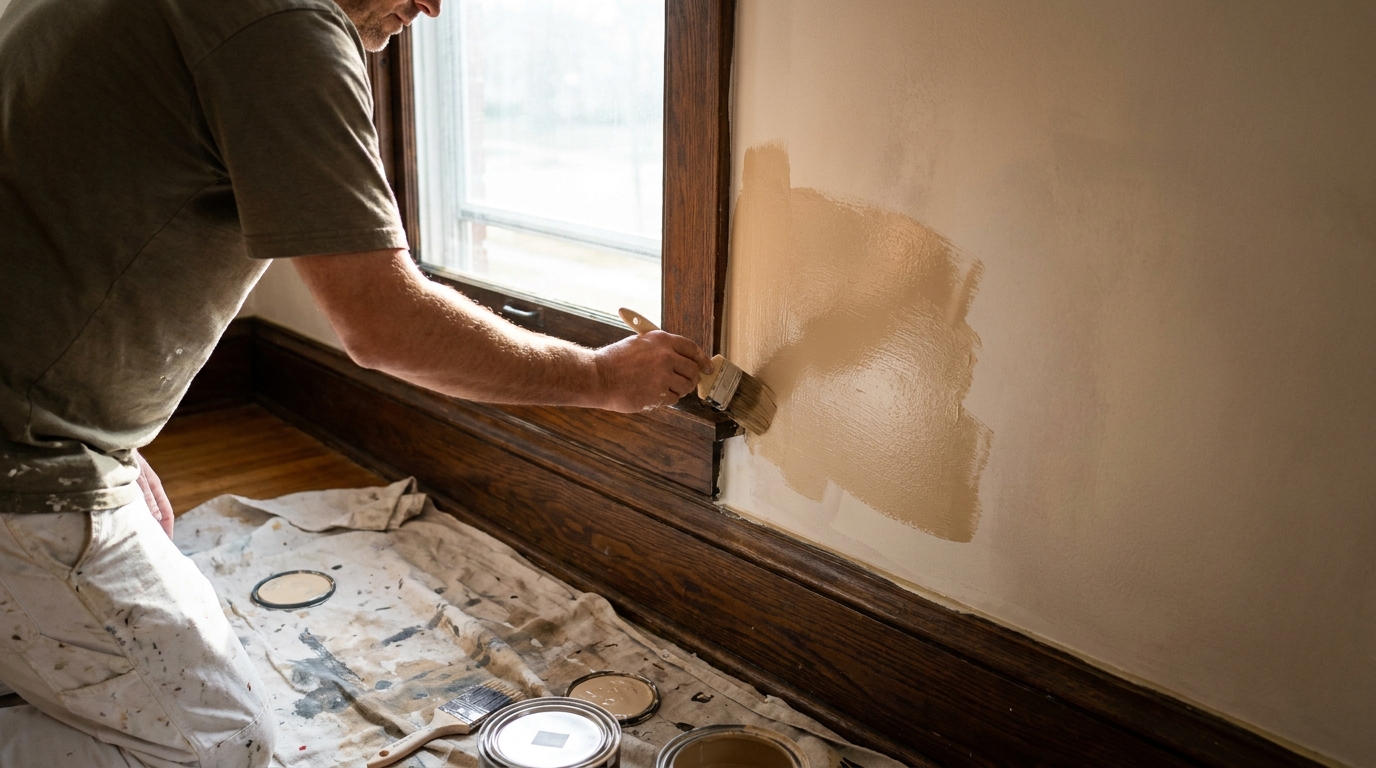
A connected home does not need one color everywhere. Repeating an undertone, using related lightness levels, or carrying one trim color through shared areas can create continuity. Bedrooms and enclosed offices can support more individual choices because doors provide a visual break.
Sheen changes perceived color. More reflective finishes can look richer and reveal more variation. Lower-sheen finishes soften light, while washable options are practical in kitchens, baths, entries, and children's rooms. Compare the coating line, cleanability, moisture exposure, and traffic instead of choosing by sheen name alone.
Confirm color names, products, and finishes in writing before materials are ordered. BH Painting Metro Detroit helps homeowners across Wayne, Oakland, and Macomb counties plan colors and complete carefully prepared interior projects. Call or text (313) 236-4558 to talk through your project.
Planning a painting project in Metro Detroit?
Share the property, surfaces, colors, condition, and timing with BH Painting Metro Detroit for a project-specific follow-up across Wayne, Oakland & Macomb counties.