Cabinet Painting vs. Replacement: How to Make the Right Investment
Sound cabinets can often gain a durable, updated finish, while damaged boxes or an unsuitable layout may justify replacement.
Article images are project inspiration and illustrate the kind of work discussed; they are not presented as completed customer projects.
Cabinet painting can transform a kitchen with less demolition, waste, and disruption than replacement, but it is not the right answer for every room. The decision should begin with cabinet condition and layout, not color inspiration alone.
If the boxes are sturdy, doors operate correctly, and the storage plan works, a professional coating system can provide a major visual update. Replacement makes more sense when boxes are swollen, damaged, poorly secured, or arranged in a way that no finish can improve.
Good candidates for cabinet painting
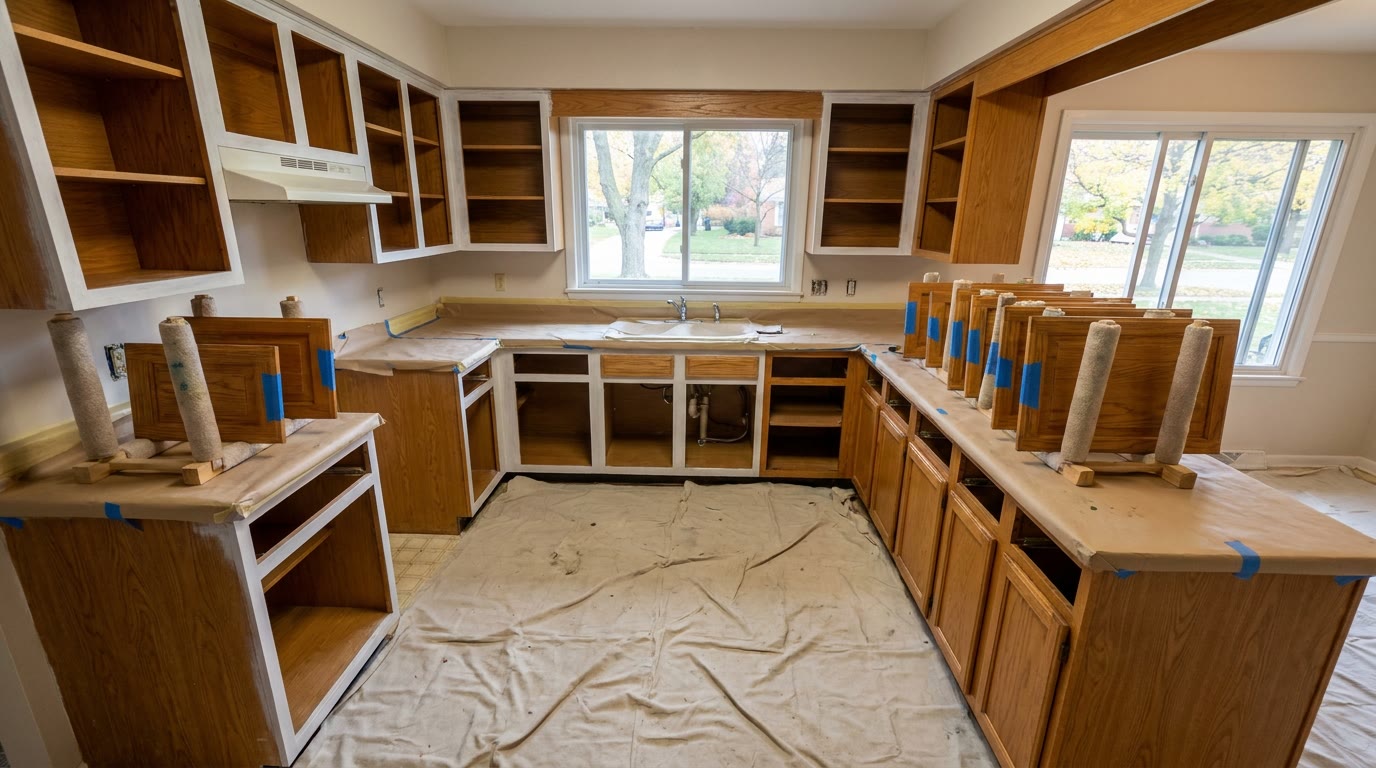
Paint is often practical for solid wood, medium-density fiberboard, and previously finished cabinets that remain stable and can accept the selected preparation system. Minor wear is expected. Widespread delamination, deep water damage, failing veneer, or loose structural parts require a closer evaluation.
Consider the layout honestly. Painting will not add drawers, improve awkward corners, raise low counters, or create space for new appliances. If those are the real goals, invest in design changes rather than using color to postpone them.
The process is more than applying paint
Cabinet surfaces collect cooking oils, hand residue, cleaners, and polish. Successful work requires a controlled sequence:
- Record and label doors, drawers, hinges, and hardware.
- Degrease all finish areas with suitable cleaners.
- Sand or abrade consistently to promote adhesion.
- Use a bonding primer compatible with the cabinet and prior finish.
- Apply cabinet-grade finish coats within product requirements.
- Allow adequate cure time before reassembly and normal use.
Skipping cleaning or cure time is a common cause of peeling and marks around handles. A finish may feel dry before it reaches full hardness.
Compare total project scope
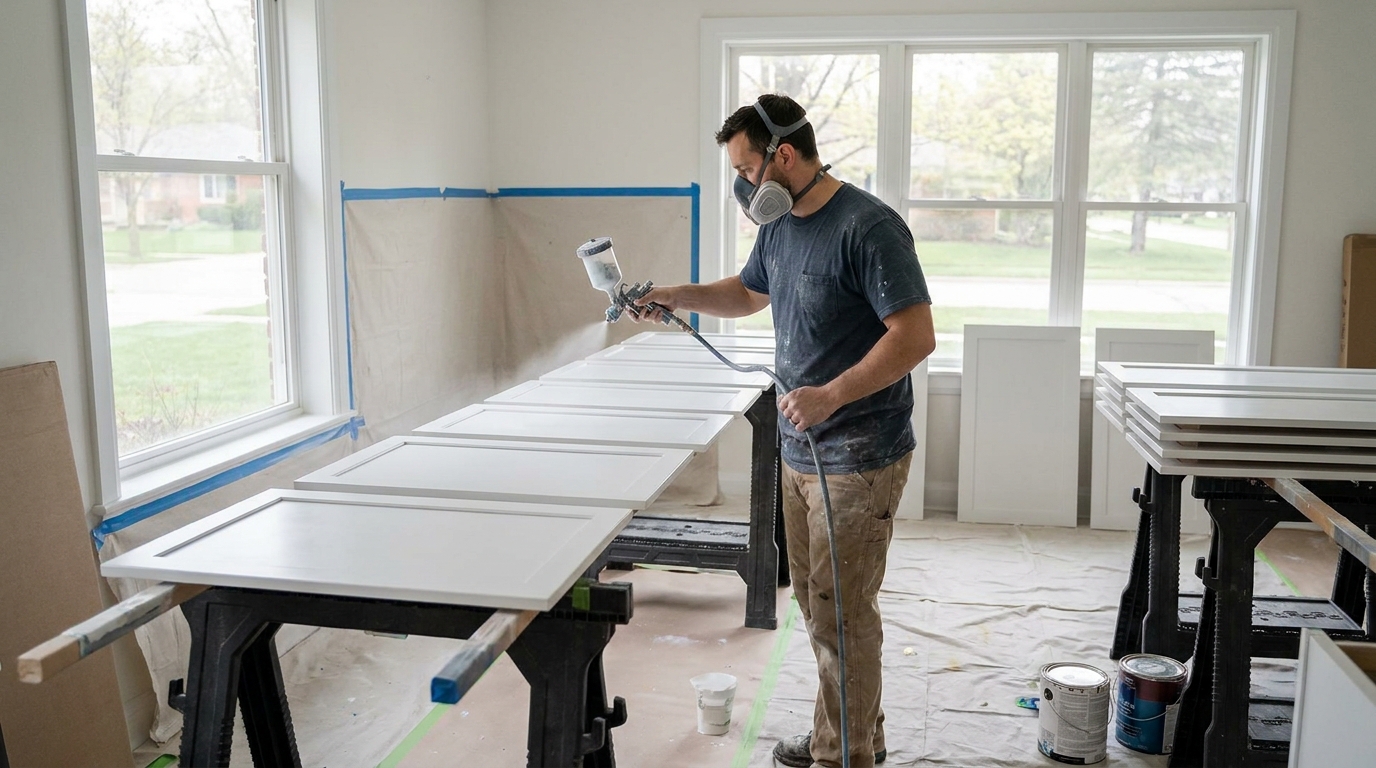
Painting usually preserves counters, cabinet boxes, and the existing footprint. Replacement may trigger added work involving counters, plumbing, electrical items, flooring, backsplash, and appliance fit. Compare complete project costs and disruption, not only the cabinet proposal.
For painting, ask whether doors and drawers are finished off-site or in a controlled area, how the room is isolated, which surfaces are included, and whether interiors are excluded. Confirm the product, color, sheen, hardware handling, and reassembly details in writing.
Set realistic finish expectations
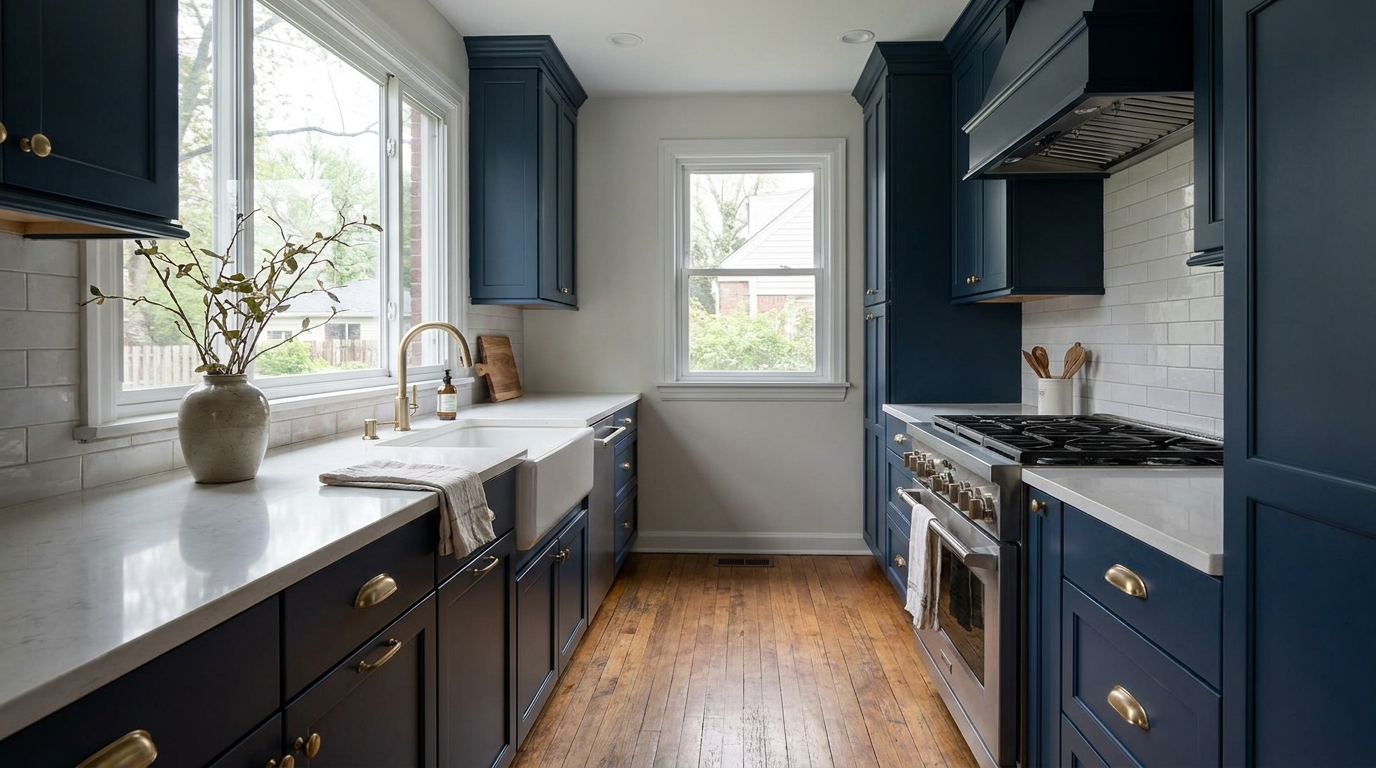
Paint does not erase wood grain, open seams, profile variation, or every sign of age. Some owners appreciate subtle grain through the new finish; others want an extremely uniform modern appearance. Review a sample and discuss expectations before the full project begins.
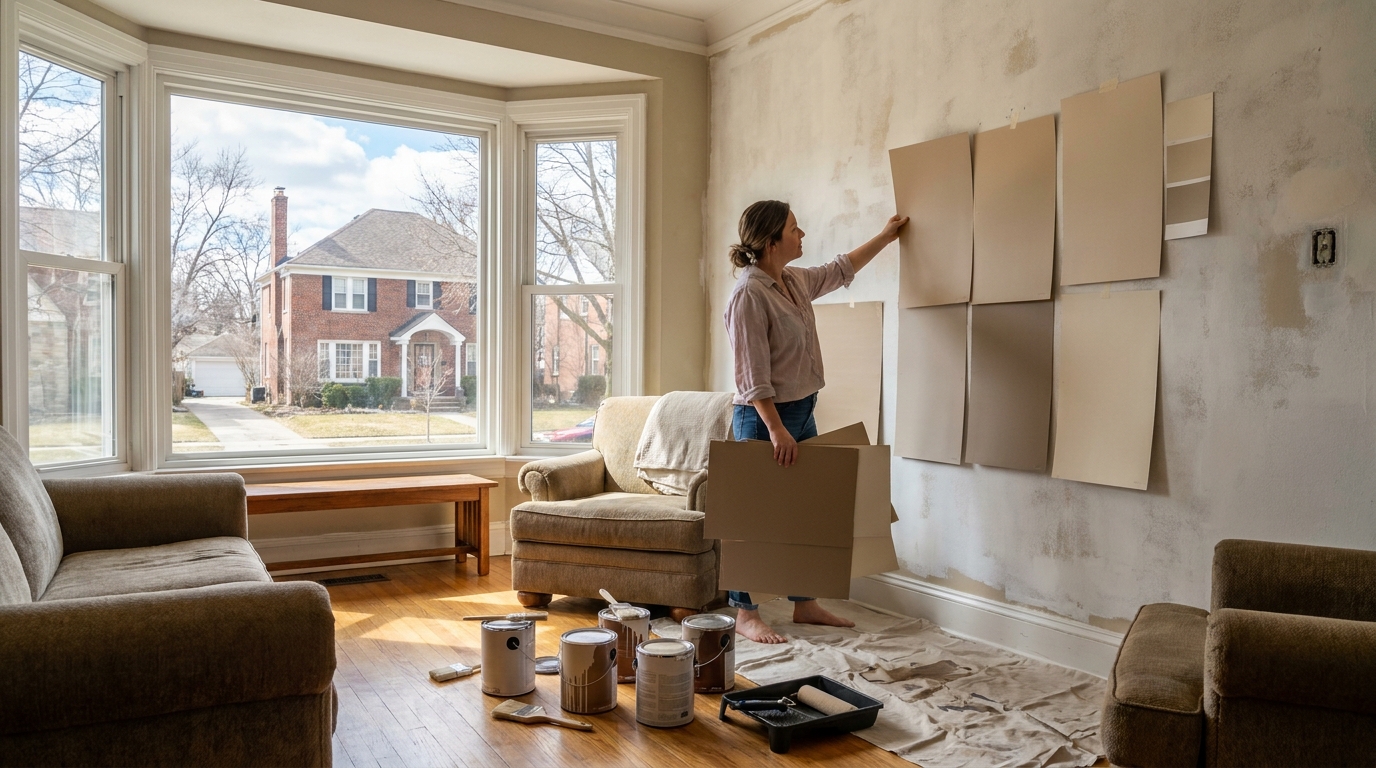
Color should be judged beside counters, flooring, backsplash, appliances, and adjacent rooms. Warm whites, muted colors, deep blues, greens, and near-black shades can all work, but lighting and fixed finishes determine which undertones belong.
BH Painting Metro Detroit offers cabinet painting and color guidance throughout Metro Detroit. Call (313) 236-4558 to schedule an assessment of cabinet condition, preparation needs, finish options, and project timing.
Planning a painting project in Metro Detroit?
Share the property, surfaces, colors, condition, and timing with BH Painting Metro Detroit for a project-specific follow-up across Wayne, Oakland & Macomb counties.