What Sets the Interior Painting Cost per Room in Metro Detroit?
Two rooms with the same floor size can take very different amounts of work. The cost of painting a room comes from its wall and ceiling area, the condition of the surfaces, the trim and doors, the color change, and how much has to be moved and protected. Here is how each one plays out in Metro Detroit houses.
Article images are project inspiration and illustrate the kind of work discussed; they are not presented as completed customer projects.
There is no honest single number for painting a room, because a room is not priced by its label. The cost of interior painting per room comes from how much surface there is, what shape it is in, how much trim and how many doors it has, how big the color change is, and how much has to be moved and protected before anyone opens a can. Two bedrooms with the same floor size can be very different jobs.
The fastest way to a real number is to describe the room. Call (313) 236-4558 for a price on your job, and have the answers to the questions below ready.
Why "per room" is a rough way to think about it
Painters work out a job from the surfaces, not the room name. A small bathroom can take longer than a large bedroom, because it is all cutting in around a vanity, a toilet, a mirror, and tile. A living room with a cathedral ceiling has far more wall than its floor plan suggests. So when you compare rooms, compare these things instead:
- Wall area, not floor area. Ceiling height matters as much as length and width. A room with nine-foot or vaulted ceilings has much more wall to paint than an eight-foot room with the same footprint.
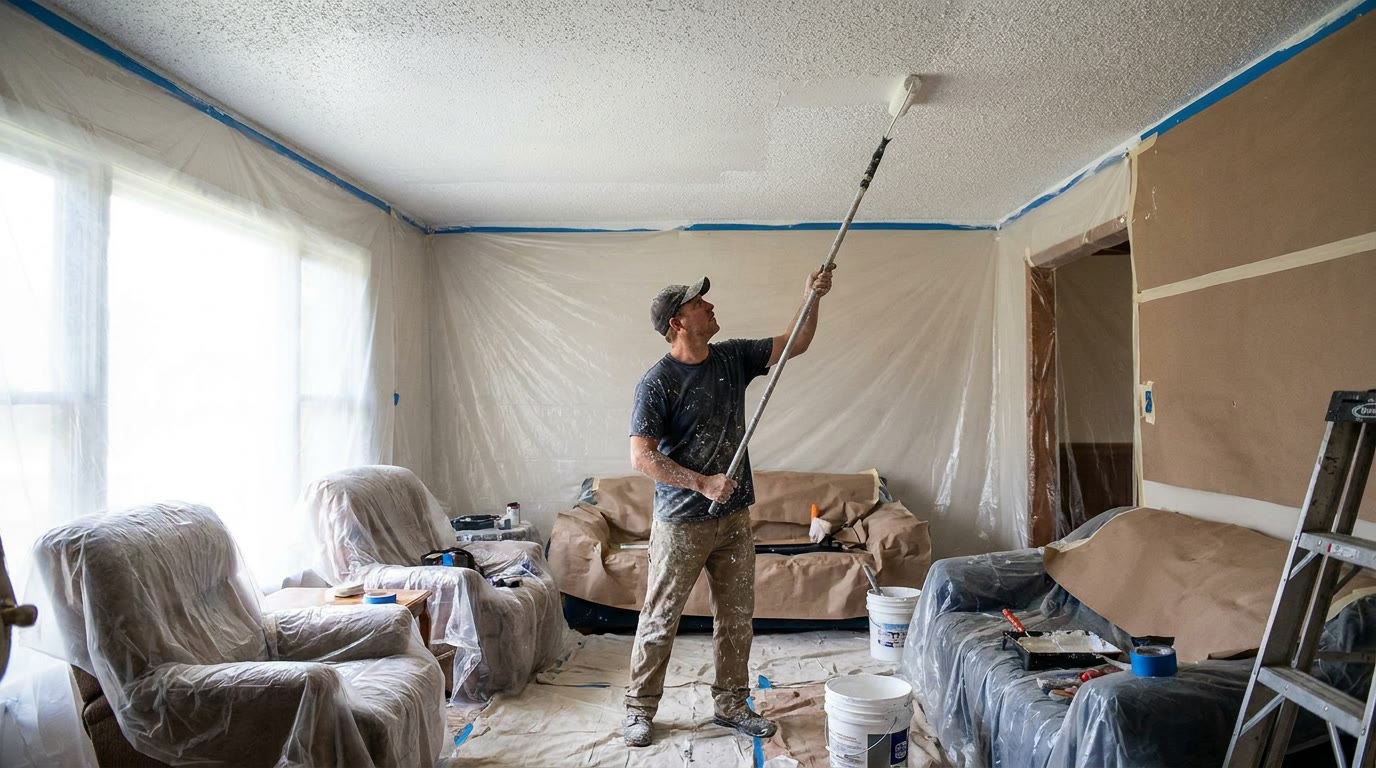
- Ceilings. Painting the ceiling is separate work, often the slowest part of a room, and it needs its own setup. Textured or popcorn ceilings take longer still.
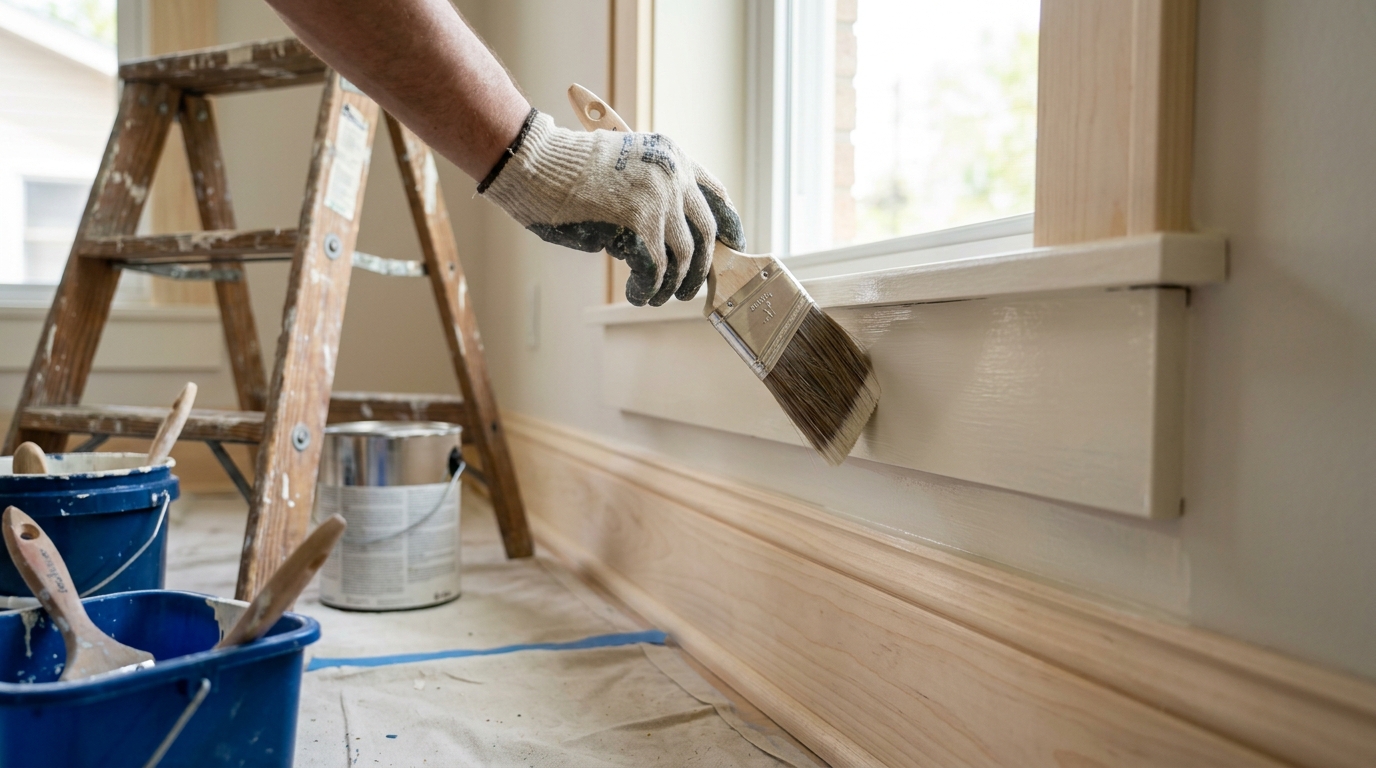
- Trim, doors, and windows. Baseboard, casings, crown molding, window sills, and every door are brushed by hand in a harder enamel. A room with a lot of woodwork can take as long on the trim as on the walls.
- Stairwells and two-story spaces. Foyers and stair walls need ladders, planks, or scaffolding, which changes the setup time more than the size does.
The condition of the walls
Preparation is where most of the variation between rooms comes from, and it depends heavily on how old the house is.
- Plaster in older Detroit-area houses. Bungalows and colonials in Detroit, Ferndale, Royal Oak, Grosse Pointe, and Pleasant Ridge often still have their original plaster. It is solid, but it cracks along the ceiling line and around doors, and those cracks need to be opened, filled, and primed so they do not come right back.
- Drywall in newer suburbs. Houses in Troy, Livonia, Canton, and Macomb County are mostly drywall. The usual work is nail pops, dents, patched holes from TVs and shelves, and corner bead damage.
- Stains and old finishes. Water stains, smoke, crayon, and grease need a stain-blocking primer, not an extra coat of wall paint. Glossy old paint has to be dulled so the new coat will grip.
- Houses built before 1978. Older paint may contain lead. Federal rules govern how painted surfaces in pre-1978 housing can be sanded, scraped, and cleaned up, and that changes how prep is done on any surface that is chipping or being disturbed.
The color change and the paint
- Light over light is usually two coats.
- A big change, such as a dark accent wall going back to white, or a pale wall going to a deep color, may need a primer and an extra coat to cover evenly.
- The product itself. A washable eggshell for a hallway, a mildew-resistant finish for a bathroom, and a flat ceiling paint are different products. Better paint usually covers in fewer coats and holds up to cleaning, which matters more in kitchens, halls, and kids' rooms.
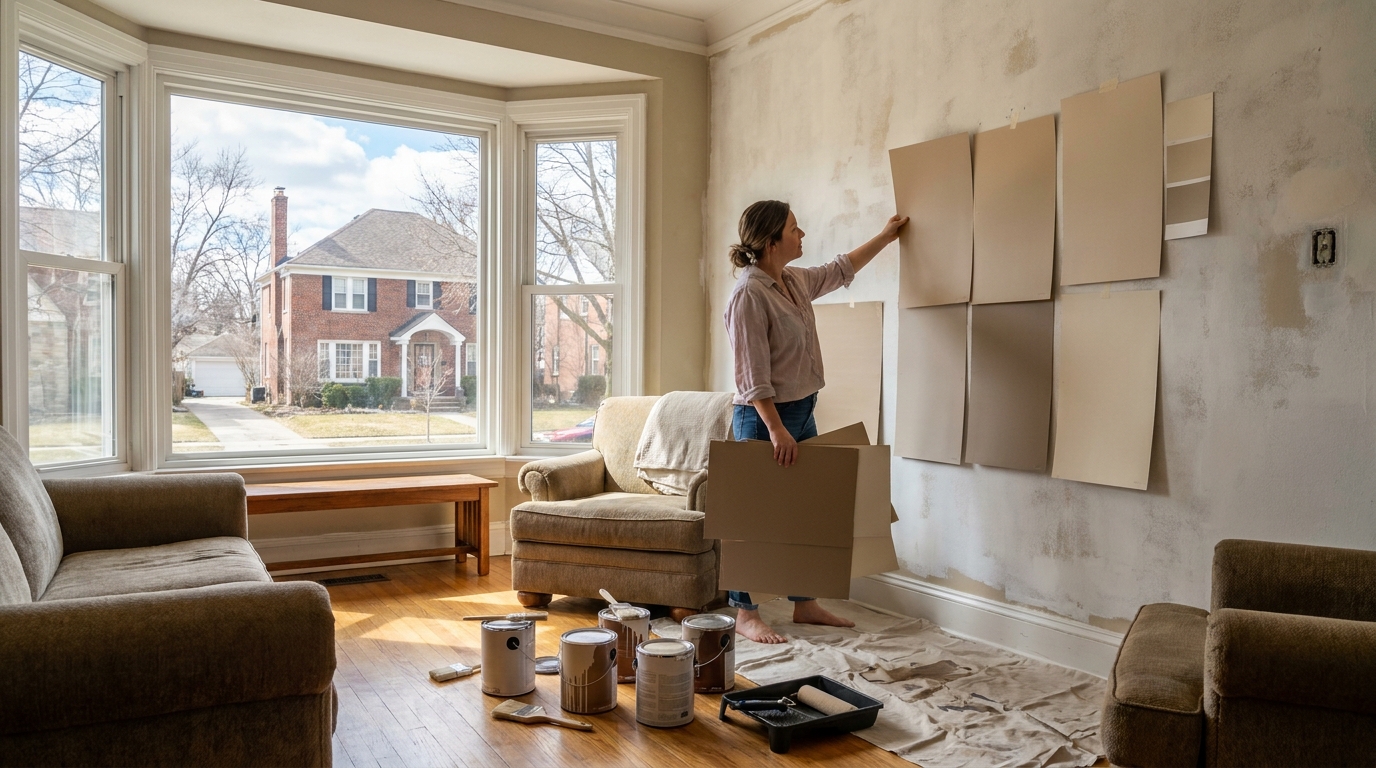
If you are still choosing the color, settle it before the job is scheduled. Our guide to testing paint color samples shows how to judge a color in your own light, which in a Michigan winter is mostly lamp light.
Furniture, protection, and access
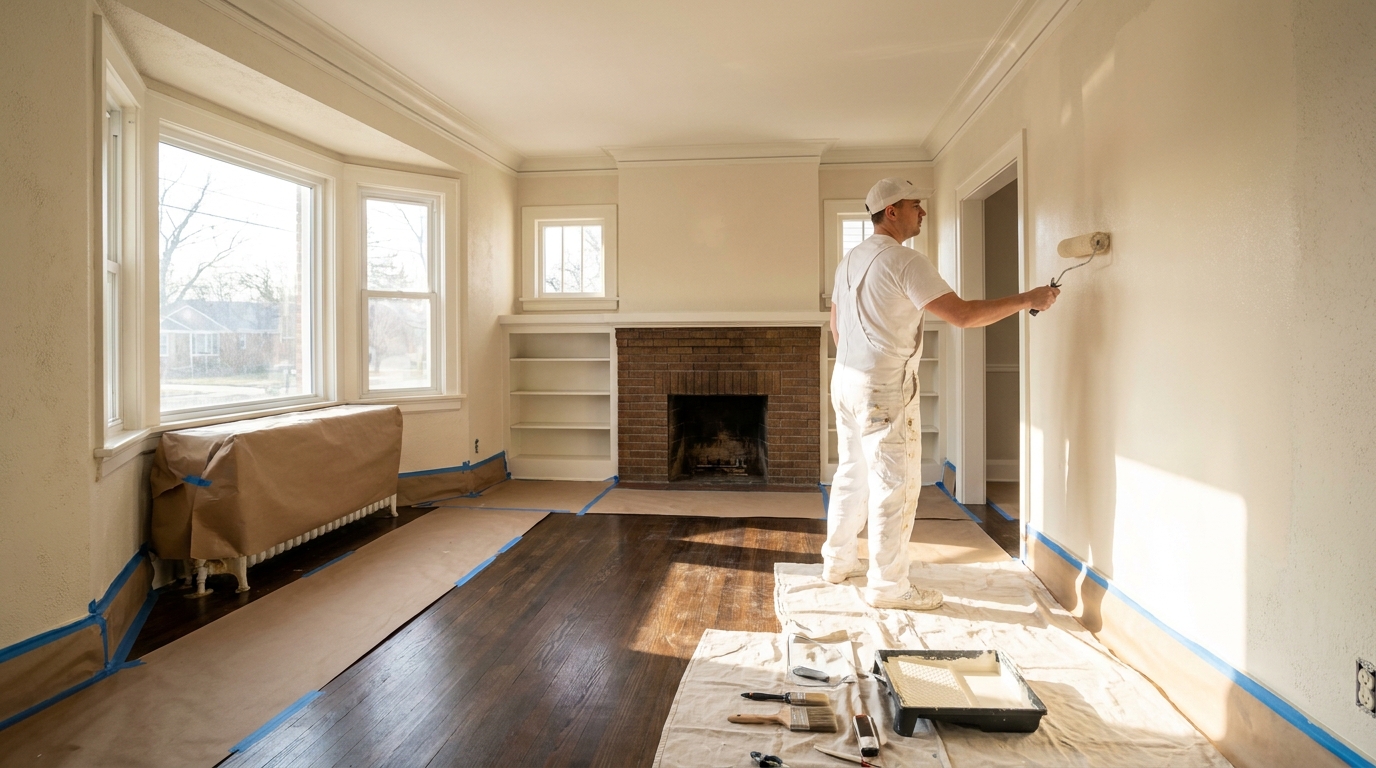
A cleared, empty room is the fastest to paint. A furnished room means moving furniture to the center, covering it, protecting floors, and taking down curtains, pictures, and outlet covers. Built-in shelving, radiators, and tight spaces behind them all add time. Let the painter know what will be in the room on the day, and what you plan to move yourself.
Why late fall is a good time to plan interior work
Exterior painting in Michigan winds down at the end of October, and interior work carries the winter. Painting indoors with the heat on is normal, but plan for fresh air, because a closed-up house holds the smell longer, as our guide on how long paint smell lasts explains. If you are painting several rooms, doing them in one visit is usually more efficient than one room at a time, because setup and cleanup are shared.
What to have ready when you call
- Which rooms, and roughly how big, including the ceiling height.
- Walls only, or ceilings, trim, and doors as well.
- The current colors and the new ones, if you know them.
- Any cracks, stains, water damage, or peeling paint.
- Roughly when the house was built.
- Whether the rooms will be empty or furnished.
Photos help a great deal. Text them to the number below with your name and city.
Interior painting in Metro Detroit
BH Painting Metro Detroit handles interior painting for houses, condos, and rentals across Wayne, Oakland, and Macomb counties, including Detroit, Royal Oak, Troy, Birmingham, Grosse Pointe, and Livonia, along with ceiling painting and trim and door painting. Call (313) 236-4558 Sunday through Thursday from 9:00 AM to 5:00 PM or Friday from 9:00 AM to 12:00 PM for a price on your job, or send us a message describing the rooms you want painted.
Planning a painting project in Metro Detroit?
Share the property, surfaces, colors, condition, and timing with BH Painting Metro Detroit for a project-specific follow-up across Wayne, Oakland & Macomb counties.