
Why Is My Bathroom Ceiling Paint Peeling? A Michigan Winter Guide
Bathroom ceiling paint peels because moisture gets behind it: shower steam condensing on a cold ceiling, a fan that does not vent outdoors, the wrong paint, or an old coating underneath that never held. Here is how to tell which one you have in a Metro Detroit house, and how the ceiling gets repainted so it stays put.
Article images are project inspiration and illustrate the kind of work discussed; they are not presented as completed customer projects.
Bathroom ceiling paint peels because moisture is getting behind the paint film. In most Metro Detroit houses the source is shower steam condensing on a ceiling that is colder than the room, a bath fan that is missing, too weak, or venting into the attic, or a coat of paint that was put over something it could not grip. Repainting only lasts once that cause is fixed.
This is the time of year the question comes up. The first frost advisories reached Wayne, Oakland, and Macomb counties in mid-October, the furnace is running, the windows are shut, and the ceiling under a cold attic is now the coldest surface in the bathroom. Steam finds it every morning.
The common causes, and how to tell them apart
- Condensation on a cold ceiling. Peeling or blistering that is worst directly over the shower, or in the corners and along the outside wall, points to steam condensing where the ceiling is coldest. Look for gray or black speckles in the same spots. That is mildew, and it grows on the same damp film.
- No fan, or a fan that does not move air out. Hold a single square of toilet paper to the grille with the fan on. If it does not hold, the fan is not pulling. A fan can also run fine and still dump the moist air into the attic, where it condenses on the roof deck and drips back onto the ceiling. A bath fan should vent outdoors.
- Flat ceiling paint in a wet room. Ordinary flat ceiling paint absorbs moisture. In a bathroom it softens, loses its grip, and lets go in sheets or curls.
- An old coating underneath. In older Detroit, Grosse Pointe, and Royal Oak houses, plaster ceilings were often finished with calcimine, a chalky coating that dissolves in water. Paint laid over it peels in large flakes and the back of each flake is powdery. Rub a damp finger on a bare spot: if it comes away white and chalky, that is likely the problem, and it needs to be washed off or sealed with a primer made for it.
- Paint over a glossy or dirty surface. Latex over old oil-based gloss, or over soap and hairspray film, never bonded in the first place. It tends to peel cleanly, with the old paint showing smooth and shiny underneath.
- A leak from above. Peeling with a brown ring or a soft, sagging spot under a bathroom or roof line upstairs is water from a leak, not steam. Fix the leak first. Our guide to painting a popcorn ceiling covers sealing a dried water stain.
Why it shows up in a Michigan winter
Warm, wet air condenses on any surface below its dew point. In summer the ceiling and the air are close in temperature, so a shower barely fogs it. Once outside temperatures drop, a bathroom ceiling under an attic, especially where the insulation is thin or has been pushed aside, can sit many degrees colder than the room. Every shower leaves a film of water there. You may even see straight lines of mildew that follow the ceiling joists or drywall seams, where the ceiling is coldest.
The peeling you notice in January often started in November, so this is a good month to look up and deal with it before it spreads.
How the ceiling gets fixed so it stays fixed
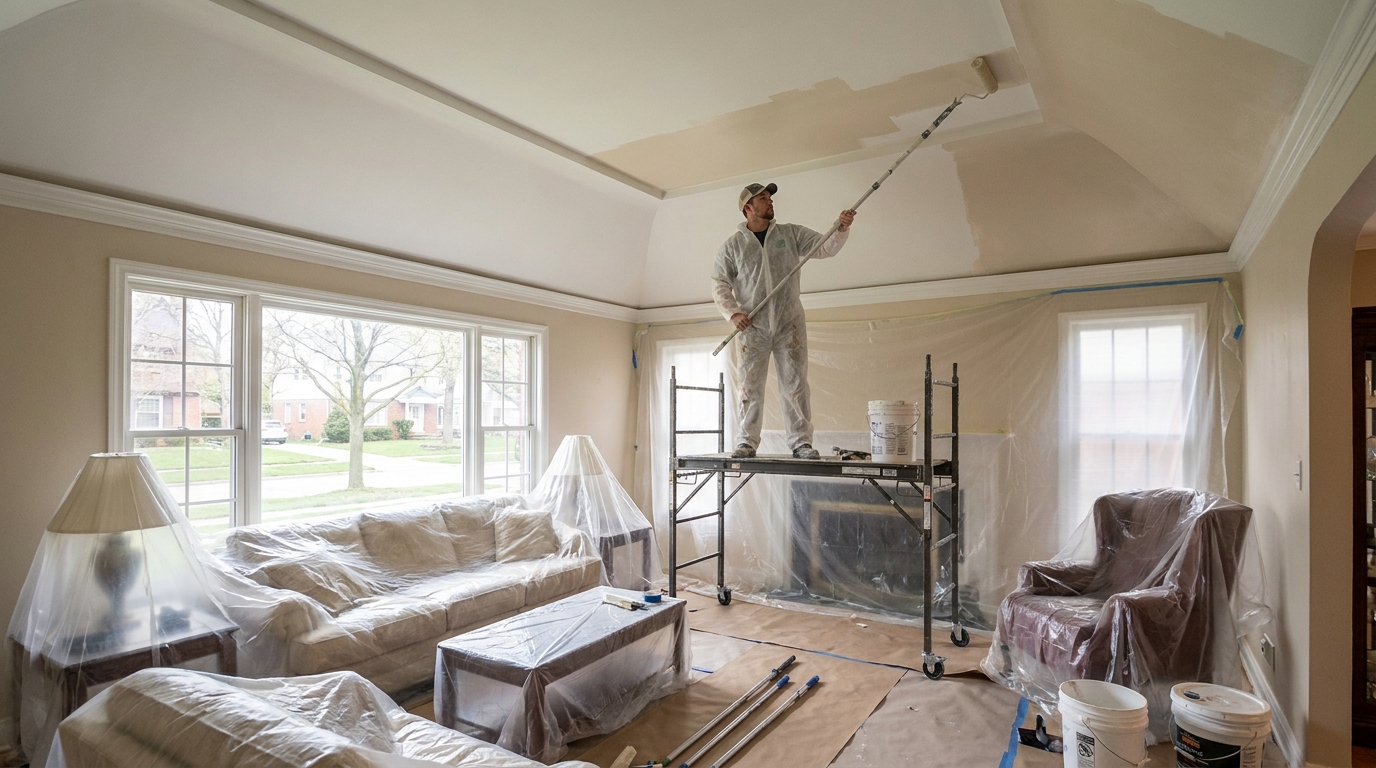
1. Fix the moisture first. Make sure the fan pulls air and vents outdoors, run it during the shower and for at least 20 minutes after, and have the attic insulation above the bathroom checked if the ceiling is cold to the touch. 2. Scrape every loose edge. Anything that lifts with a putty knife has to come off. In a house built before 1978, assume old layers may contain lead and avoid dry sanding or scraping that makes dust until it has been tested. 3. Kill the mildew. Wash affected areas with a mildew cleaner and let the ceiling dry fully. Paint over live mildew and it grows back through the new coat. 4. Deal with what is underneath. Wash off calcimine or seal it with a primer made for chalky surfaces. Degloss old oil paint. Skim the edges of peeled areas so they do not telegraph through. 5. Prime with the right primer. A bonding or stain-blocking primer, chosen for the surface, is what the finish coat actually holds on to. 6. Use a bathroom-rated finish. A satin or eggshell paint rated for bathrooms, with a mildew-resistant film, sheds moisture far better than flat ceiling paint. 7. Let it cure before steam. Give the paint the time the label calls for before the first long, hot shower. Keep the door open and the fan running for the first few days.
When to call a painter
A small peeled patch over the tub is a reasonable weekend job once the fan is sorted out. Call a professional when the peeling covers most of the ceiling, when the flakes are chalky or come off in large sheets, when the house is older and the paint may contain lead, or when the ceiling is high, textured, or above a stairwell. Those are the jobs where the prep is most of the work.
Bathroom ceiling painting in Metro Detroit
BH Painting Metro Detroit does bathroom ceiling painting and interior painting for houses, condos, and rentals across Wayne, Oakland, and Macomb counties, including Detroit, Royal Oak, Troy, Birmingham, Grosse Pointe, and Livonia. Call (313) 236-4558 Sunday through Thursday from 9:00 AM to 5:00 PM or Friday from 9:00 AM to 12:00 PM, or send us a message with a photo of the peeling ceiling.
Planning a painting project in Metro Detroit?
Share the property, surfaces, colors, condition, and timing with BH Painting Metro Detroit for a project-specific follow-up across Wayne, Oakland & Macomb counties.